
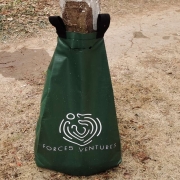
water storage bag PVC Bag tree watering bag

In today’s competitive industrial markets, branding has become as important as product performance. This is especially true in the tarpaulin industry, where companies rely on recognizable and durable branding on products such as PVC tarps, truck tarps, construction tarps, insulated tarps, agriculture tarps, mesh tarps, scaffold sheeting, and pallet wraps.

Why Logo Printing Matters on Tarps?

1. Brand Visibility & Professional Image

Whether on a job site, transport route, or warehouse, printed logos help companies communicate a strong and consistent brand identity.

2. Product Identification & Traceability

Logo printing helps customers distinguish:

  • Different product models
  • Different weight/grade of tarps
  • Specific project or job-site assignments

This is especially important for construction tarps, insulated tarps, and reusable pallet wraps.

3. Anti-Theft & Accountability

Branded tarps are less likely to be stolen or misused, particularly for:

A clearly printed logo acts as a deterrent and helps prove ownership.

Common Printing Methods Used in Tarp Manufacturing

1. Screen Printing (Silk Printing)

Best for:
PVC coated tarps, truck tarps, PVC mesh tarps, billboard tarps, construction tarps

Advantages:

  • Bright colors
  • High durability
  • Cost-effective for large batches

How it works:
Ink is pushed through a mesh screen onto the tarp surface, creating a crisp and solid design.

2. Digital Printing

Best for:
Advertising tarps, banner tarps, event tarps, custom artwork

Advantages:

  • Full-color images
  • Detailed graphics
  • Fast personalization for small batches

Note: Digital printing is less common for heavy-duty industrial tarps due to abrasion concerns but excellent for marketing-focused tarpaulin products.

3. Heat Transfer Printing

Best for:
PE tarps, small logos, product labels, warning signs

Advantages:

  • Good for complex or multi-color designs
  • High precision
  • Smooth finish

Usage: Common for safety warnings on construction tarps, specification labels, and model marking.

4. UV Printing

Best for: PVC tarps that require long-term outdoor exposure.

Advantages:

  • UV-resistant inks
  • Excellent outdoor lifespan
  • Sharp, detailed prints

Common on:

  • PVC coated tarpaulins
  • Outdoor truck tarps
  • Oil & gas industrial tarps

Where Logo Printing Is Used in the Tarp Industry?

1. Trucking & Transportation

Large, bold logos printed on both sides of trucking tarps turn highway transport into moving billboards.

2. Construction & Industrial Sites

Printed logos on:

help workers identify the correct materials, enforce safety standards, and reinforce brand recognition at job sites.

3. Agriculture & Outdoor Protection

For farms and agricultural companies, logo printing on:

helps track equipment and prevent misplacement across large outdoor areas.

4. Warehousing & Logistics

Logo printing is widely used in:

to improve material tracking and ensure easy product recognition during shipping.

Key Considerations When Printing Logos on Tarps

To guarantee quality and durability, manufacturers follow strict guidelines during the printing stage.

1. Ink Compatibility With Tarp Material

Different tarps require different inks:

  • PVC tarps → solvent-based or UV-curable inks
  • PE tarps → heat-transfer or special adhesion inks
  • Insulated tarps → printing must not damage foam layers

Incorrect ink selection can lead to peeling or fading.

2. Surface Preparation

Before printing:

  • The tarp must be clean and free of dust/oils
  • Surface tension may need to be adjusted
  • For PVC tarps, pre-treatment improves adhesion

Proper preparation ensures long-lasting prints.

3. Color Accuracy & Pantone Matching

Many clients request Pantone color matching for consistent branding.
This is crucial for companies that use tarps across multiple product lines.

4. Logo Placement

Common placement areas include:

  • Corners of tarps
  • Center logo for large truck tarps
  • Side panels of construction tarps
  • Edge strips for pallet wraps
  • Repeated pattern printing (custom option)

Proper placement improves visibility and branding effectiveness.

5. Durability Requirements

Outdoor tarps face:

  • UV exposure
  • Rain and moisture
  • Abrasion
  • Temperature changes
  • Chemical contact (oil, fuel, etc.)

Printing inks should be selected based on the tarp’s application environment.

6. Printing After vs. Before Fabric Welding

Two production sequences are possible:

Printing Before Welding

Used for:

  • large truck tarps
  • big advertising tarps
  • continuous roll printing

Printing After Welding

Used for:

  • small logos
  • patch labels
  • custom marking on finished goods

The correct method ensures clean, distortion-free results.

Logo printing is a crucial step in the tarp manufacturing process. Beyond aesthetics, it enhances branding, product identification, theft prevention, and professional presentation across industries such as transportation, construction, agriculture, and logistics.

By choosing the right printing method—whether screen printing, digital printing, UV printing, or heat transfer—manufacturers ensure long-lasting, high-quality branding that withstands the tough environments in which industrial tarps are used.
CUSTOM TARPS MANUFACTURER TRUCK TARPS FACTORY

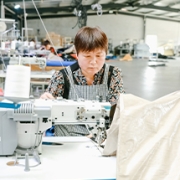
In the world of tarpaulin manufacturing, stitching is one of the most important production steps. Whether you’re producing PVC tarps, canvas tarps,PE tarps, truck tarps, trailer tarps,construction tarps, insulated tarps, industry tarps or agriculture tarps, the stitching process directly impacts product strength, longevity, and overall performance in demanding environments.

What Is Stitching in Tarp Manufacturing?

Stitching is the process of using industrial sewing machines to join multiple layers of tarp material—such as PVC coated fabric, polyethylene woven fabric,or insulated tarp layers—into a finished structure. This method reinforces edges, strengthens seams, and ensures the tarp can withstand tension, wind load, and long-term outdoor exposure.

Stitching is especially important in:

  • Reinforced hems
  • Corner patches
  • Heavy-duty webbing attachment
  • Grommet and D-ring reinforcement
  • Joining foam layers in insulated tarps
  • Binding edges of construction tarps and scaffold sheeting

Why Stitching Is Critical for High-Quality Tarps

1. Enhanced Strength & Structural Integrity

Stitching binds layers of tarp material together, creating strong seams that can handle tension and stress.

This is crucial for:

High-quality stitching prevents seam failure, tearing, and fabric separation during heavy use.

2. Improved Durability in Harsh Environments

Stitched seams offer excellent durability when combined with reinforced webbing or double-folded hems. Heavy-duty tarps used in mining, industrial manufacturing, and oil & gas applications depend on strong stitching to withstand friction, UV exposure, chemicals, and temperature changes.

3. Customization Flexibility

The stitching process allows customization for different industries:

This flexibility makes stitching essential for producing premium custom tarpaulin solutions.

4. Seam Reinforcement Beyond Welding

While heat welding and RF welding are widely used for bonding PVC tarps, stitching is the preferred method when:

  • Layers include foam, insulation, or non-PVC components
  • The design requires complex shapes or overlapping materials
  • High flexibility and breathability are needed, such as canvas tarps or cotton tarps
  • For insulated tarps and specialty covers, stitching is not optional—it is the only method to secure the internal structure.

Stitching is more than just a step in the tarp manufacturing process—it is the foundation of durability, strength, and long-term performance across multiple industries. From flatbed truck tarps to construction tarps, insulated tarps, and agriculture covers, professional stitching ensures your tarps can withstand real-world industrial demands.

PVC coated polyester fabric industrial waterproof PVC tarpaulin fabric best PVC coated tarps for outdoor protection

The PVC coated tarpaulin industry is experiencing strong global growth as demand rises across sectors including transportation, construction, agriculture, mining, and industrial storage. At the core of this expansion is the evolution of the PVC coating process, which continues to enhance durability, weather resistance, and product performance standards.

Precision Coating Technology Elevates Material Strength

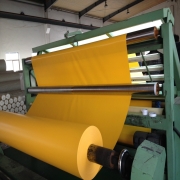
The manufacturing of PVC coated tarpaulin relies heavily on the precision and stability of the knife-coating process, in which liquid PVC paste is evenly applied to a high-tenacity polyester base fabric. This advanced coating technology ensures:

  • Uniform thickness and superior adhesion
  • High tensile and tear strength
  • Long-lasting waterproof and UV-resistant surface
  • Excellent resistance to abrasion, chemicals, and extreme temperature

The coated layers are fused under controlled heat and pressure to form a strong and flexible composite textile designed for high-stress outdoor applications.

Key Stages of the PVC Coating Process

The production of high-quality PVC tarpaulin typically includes the following steps:

1. Base Fabric Weaving

High-strength polyester yarn (commonly 1000D or 1500D) is woven into a stable grid structure such as 18×18 or 20×20 to provide structural support.

2. PVC Paste Formulation

Specialized PVC compounds are blended with additives such as UV absorbers, flame-retardants, plasticizers, anti-fungal agents, and stabilizers to meet specific performance requirements.

3. Knife-Over-Roll Coating

The PVC paste is applied evenly to both sides of the polyester base cloth through a precision knife-coating machine, ensuring smooth surface distribution and controlled thickness.

4. High-Temperature Curing & Lamination

The coated fabric passes through heating chambers, bonding the PVC layer firmly to the textile base and creating a stable waterproof barrier.

5. Surface Embossing

Embossing rollers texture the surface to enhance anti-slip performance, gloss, and appearance, depending on customer specification.

6. Material Testing & Quality Control

Industry-standard tests such as tensile strength, tear strength, adhesion, waterproof rating, temperature resistance, and flame retardancy ensure consistent performance.

Advantages of PVC Coated Tarpaulin

  • 100% waterproof and weatherproof
  • High UV, tear, and abrasion resistance
  • Flame-retardant options (NFPA701 / B1 / M2)
  • Chemical and oil resistance
  • Long service life and easy repairability
  • Suitable for extreme temperatures from -30°C to +70°C

These benefits position PVC coated tarps as an essential solution for truck covers,industrial curtains, tents,temporary shelters,mining covers,agricultural structures,and outdoor storage.

Market Outlook and Industry Trends

The PVC coated tarpaulin market is projected to continue expanding due to:

  • Growth in global transportation and logistics activity
  • Increased infrastructure development
  • Rising weather-protection and safety standards
  • Demand for customized and reinforced heavy-duty covers

Manufacturers are also focusing on environmentally friendly formulations and recyclable PVC, responding to sustainability initiatives.

Conclusion

As manufacturing technology advances,the PVC coating process remains the defining factor in delivering high-performance tarpaulin solutions. With expanding global demand, companies investing in production efficiency, material innovation, and quality assurance are expected to lead the next phase of market development.